Running a small business is no small feat—juggling customers, sales, and follow-ups can be overwhelming. That’s where CRM software for small business comes in, streamlining your operations and boosting customer relationships with ease.


Why CRM Software for Small Business Is a Game-Changer

Customer Relationship Management (CRM) software isn’t just for big corporations. Small businesses today are leveraging CRM tools to stay competitive, organized, and customer-focused. A good CRM system centralizes customer data, automates repetitive tasks, and improves communication across teams. For small businesses operating with limited resources, this efficiency can mean the difference between stagnation and growth.
Centralized Customer Data
One of the biggest challenges small businesses face is scattered customer information—emails in inboxes, notes on sticky pads, phone numbers in personal phones. CRM software for small business consolidates all this data into one secure, accessible platform. Every interaction, purchase history, and support ticket is stored and easily retrievable.
- Eliminates data silos across departments
- Enables personalized communication based on customer history
- Reduces human error in data entry and follow-ups
This centralization ensures that whether it’s sales, marketing, or customer service, everyone on the team has the same up-to-date information.
Improved Customer Relationships
Strong customer relationships are the backbone of any successful small business. CRM tools help nurture these relationships by tracking every touchpoint. From the first inquiry to post-sale support, you can monitor and respond to customer needs proactively.
“A CRM doesn’t just store data—it helps you understand your customers better, anticipate their needs, and deliver exceptional service.” — HubSpot, HubSpot CRM Guide
With features like automated reminders, follow-up sequences, and customer segmentation, small businesses can deliver a more personalized experience that fosters loyalty and repeat business.
Top 5 CRM Software for Small Business in 2024
Choosing the right CRM software for small business can be overwhelming with so many options available. To help you make an informed decision, we’ve analyzed the top five platforms based on affordability, ease of use, scalability, and feature set.
1. HubSpot CRM
HubSpot CRM is widely regarded as one of the best CRM software for small business due to its powerful free plan and seamless integration with marketing, sales, and service tools. It’s intuitive, scalable, and perfect for startups and growing businesses.
- Free forever plan with essential features
- Drag-and-drop email templates and scheduling
- Integration with over 1,000 apps via HubSpot Marketplace
Its user-friendly interface makes onboarding quick, and its automation capabilities reduce manual work significantly. For example, you can set up workflows to automatically assign leads, send follow-up emails, or update deal stages.
Learn more at HubSpot CRM.
2. Zoho CRM
Zoho CRM is a robust, affordable solution tailored for small to mid-sized businesses. It offers AI-powered insights, sales automation, and excellent mobile functionality.
- AI assistant (Zia) for predictive lead scoring
- Customizable dashboards and sales pipelines
- Strong integration with other Zoho apps (e.g., Books, Campaigns)
What sets Zoho apart is its flexibility. You can tailor workflows, fields, and automation rules to match your unique business processes. It’s also available in multiple languages and supports global businesses.
Explore Zoho CRM at Zoho CRM.
3. Salesforce Essentials
Salesforce, a leader in the CRM space, offers Salesforce Essentials—a simplified version designed specifically for small businesses with up to 10 users.
- 360-degree view of customers
- Pre-built sales and support processes
- Mobile app with offline access
While Salesforce is known for its complexity, Essentials streamlines the experience with guided setup and role-based dashboards. It’s ideal for small teams that plan to scale and eventually migrate to more advanced Salesforce editions.
Visit Salesforce Essentials for pricing and features.
4. Freshsales (by Freshworks)
Freshsales stands out for its AI-driven lead prioritization and built-in phone and email capabilities. It’s a favorite among sales-focused small businesses.
- Integrated phone, email, and chat
- Gong-like conversation intelligence (Freddy AI)
- Visual deal pipeline with drag-and-drop functionality
Freshsales offers a clean, modern interface and real-time insights that help sales teams close deals faster. Its AI features analyze call transcripts and email sentiment to recommend next steps.
Check it out at Freshsales.
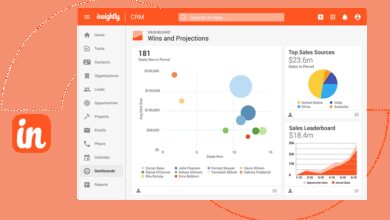
5. Insightly
Insightly is a great choice for small businesses that need project management alongside CRM functionality. It bridges the gap between sales and operations.
- Project and task management integration
- Customer lifecycle tracking
- Workflow automation and email integration
Its strength lies in connecting sales pipelines with project timelines, making it ideal for service-based businesses like consultants, agencies, and contractors.
Learn more at Insightly.
Key Features to Look for in CRM Software for Small Business
Not all CRM systems are created equal. When evaluating CRM software for small business, focus on features that deliver real value without overwhelming your team.
Contact and Lead Management
The core function of any CRM is managing contacts and leads. Look for tools that allow you to import, segment, and track leads through customizable pipelines.
- Automated lead capture from web forms and emails
- Duplicate detection and merge tools
- Tagging and categorization for easy filtering
Effective lead management ensures no opportunity falls through the cracks and helps prioritize high-value prospects.
Sales Automation
Time is precious for small business owners. Sales automation reduces manual tasks like data entry, follow-up emails, and task assignments.
- Automated email sequences based on triggers
- Task reminders and calendar syncing
- Deal stage updates and notifications
For example, when a lead downloads a brochure, the CRM can automatically send a thank-you email, assign a follow-up task to a sales rep, and log the activity—all without human intervention.
Reporting and Analytics
Data-driven decisions are crucial for growth. A good CRM should offer clear, visual reports on sales performance, customer behavior, and team productivity.
- Customizable dashboards
- Sales forecasts and pipeline health reports
- Customer acquisition cost (CAC) and lifetime value (LTV) tracking
These insights help identify bottlenecks, optimize strategies, and justify investments in marketing or staffing.
How to Choose the Right CRM Software for Small Business
Selecting the right CRM software for small business involves more than just comparing features. It requires understanding your business needs, team size, budget, and long-term goals.
Assess Your Business Needs
Start by identifying your pain points. Are you losing leads? Struggling with follow-ups? Need better reporting? Map these challenges to CRM capabilities.
- Sales teams may prioritize pipeline visibility
- Marketing teams need campaign tracking and lead scoring
- Service teams benefit from ticketing and knowledge bases
A clear understanding of your needs prevents overspending on unnecessary features.
Consider Ease of Use and Onboarding
A CRM is only effective if your team actually uses it. Complex systems lead to low adoption rates. Look for platforms with intuitive interfaces, mobile access, and good onboarding support.
- Free trials and demo versions
- Video tutorials and knowledge bases
- Live training or customer support
HubSpot and Zoho, for instance, offer extensive free training resources to help teams get up to speed quickly.
crm software for small business – Crm software for small business menjadi aspek penting yang dibahas di sini.
Check Integration Capabilities
Your CRM shouldn’t exist in isolation. It should integrate seamlessly with tools you already use—email, calendar, accounting software, e-commerce platforms, and marketing tools.
- Native integrations with Gmail, Outlook, Slack, Zoom
- API access for custom integrations
- App marketplaces (e.g., HubSpot Marketplace, Zoho Marketplace)
For example, connecting your CRM to Mailchimp allows you to sync contact lists and track email campaign performance directly within the CRM.
Common Challenges and How CRM Software Solves Them
Small businesses face unique operational hurdles. CRM software for small business is designed to address many of these common challenges head-on.
Challenge: Inconsistent Follow-Ups
Missed follow-ups lead to lost sales and frustrated customers. Manual tracking is error-prone and inefficient.
Solution: CRM software automates follow-up reminders and email sequences. You can set up workflows to send a series of personalized emails based on customer behavior—like abandoning a cart or requesting a demo.
“Automated follow-ups increase response rates by up to 300%. Consistency builds trust.” — Neil Patel, Email Marketing Tips
Challenge: Poor Team Collaboration
When sales, marketing, and support teams work in silos, customer experience suffers. Important information gets lost, and response times slow down.
Solution: A shared CRM platform ensures all teams access the same customer data. Notes, call logs, and support tickets are visible to everyone, enabling smoother handoffs and coordinated efforts.
Challenge: Lack of Sales Visibility
Without clear insights into your sales pipeline, forecasting becomes guesswork. You can’t manage what you can’t measure.
Solution: CRM dashboards provide real-time visibility into deal stages, conversion rates, and team performance. Managers can spot stalled deals, identify top performers, and adjust strategies accordingly.
Implementation Tips for CRM Success
Even the best CRM software for small business will fail if not implemented properly. Follow these best practices to ensure a smooth rollout and high user adoption.
Start with Clear Goals
Define what success looks like. Is it increasing lead conversion by 20%? Reducing response time to customer inquiries? Setting measurable goals helps track ROI and keeps the team focused.
- Align CRM goals with overall business objectives
- Assign ownership of key metrics to team members
- Review progress monthly
Train Your Team Thoroughly
Resistance to change is common. Invest time in training sessions, create internal documentation, and appoint a CRM champion within the team.
- Conduct hands-on workshops
- Provide cheat sheets and quick-reference guides
- Encourage feedback and address concerns promptly
Well-trained teams are more likely to embrace the system and use it effectively.
Migrate Data Carefully
Transferring existing customer data into a new CRM requires planning. Clean your data first—remove duplicates, update outdated information, and standardize formats.
- Use CSV imports for bulk data
- Test with a small dataset before full migration
- Verify data accuracy post-import
Many CRM providers offer migration tools or services to assist with this process.
Future Trends in CRM for Small Businesses
The CRM landscape is evolving rapidly, driven by AI, automation, and customer expectations. Small businesses that stay ahead of these trends gain a competitive edge.
AI-Powered Insights and Automation
Artificial intelligence is no longer a luxury. Modern CRM software for small business uses AI to predict customer behavior, recommend next steps, and automate routine tasks.
- AI-driven lead scoring to prioritize hot prospects
- Smart email replies and sentiment analysis
- Forecasting sales trends based on historical data
For example, Zoho’s Zia and HubSpot’s Operations Hub use AI to automate data entry and flag at-risk customers.
Mobile-First CRM Experiences
With remote work and on-the-go sales teams, mobile CRM access is essential. Future CRMs will offer richer mobile experiences with offline capabilities, voice commands, and augmented reality support.
- Mobile apps with full functionality
- Location-based reminders and check-ins
- Voice-to-text note-taking during client meetings
Freshsales and Salesforce lead the pack with robust mobile CRM solutions.
Integration with E-Commerce and Social Media
As customers interact across multiple channels, CRMs are integrating deeper with e-commerce platforms (like Shopify) and social media (like Facebook and LinkedIn).
- Sync customer orders and behavior from online stores
- Track social media interactions and leads from ads
- Engage customers directly from the CRM interface
This omnichannel approach ensures a unified customer view, no matter where the interaction occurs.
What is CRM software for small business?
CRM software for small business is a tool that helps small companies manage customer interactions, track sales leads, automate marketing, and improve customer service by centralizing all customer data in one place.
Is there a free CRM software for small business?
Yes, several CRM platforms offer free plans ideal for small businesses, including HubSpot CRM, Zoho CRM, and Freshsales. These free versions often include core features like contact management, email tracking, and basic automation.
How much does CRM software for small business cost?
Prices vary widely. Free plans are available, while paid plans typically range from $10 to $50 per user per month. Some CRMs charge based on features or number of contacts, so it’s important to evaluate your needs before choosing.
Can CRM software integrate with my email and calendar?
Yes, most CRM software for small business integrates seamlessly with popular email services like Gmail and Outlook, as well as calendars like Google Calendar and Microsoft Outlook. This allows for automatic logging of emails and scheduling of follow-ups.
How long does it take to implement a CRM system?
Implementation time depends on the complexity of the CRM and your data. Simple setups can take a few days, while more complex migrations may take several weeks. Using a phased approach and proper training can speed up adoption.
Choosing the right CRM software for small business is one of the most impactful decisions you can make. It streamlines operations, enhances customer relationships, and provides valuable insights for growth. Whether you opt for HubSpot’s free plan, Zoho’s affordability, or Salesforce’s scalability, the key is to select a system that fits your needs, budget, and team size. With proper implementation and ongoing use, a CRM becomes more than a tool—it becomes the central nervous system of your business.
crm software for small business – Crm software for small business menjadi aspek penting yang dibahas di sini.
Further Reading: